Charting Interoperability Barriers Between Legacy Banking Rails and Emerging Gaming Networks
Mia Berger · Jun 21, 2026
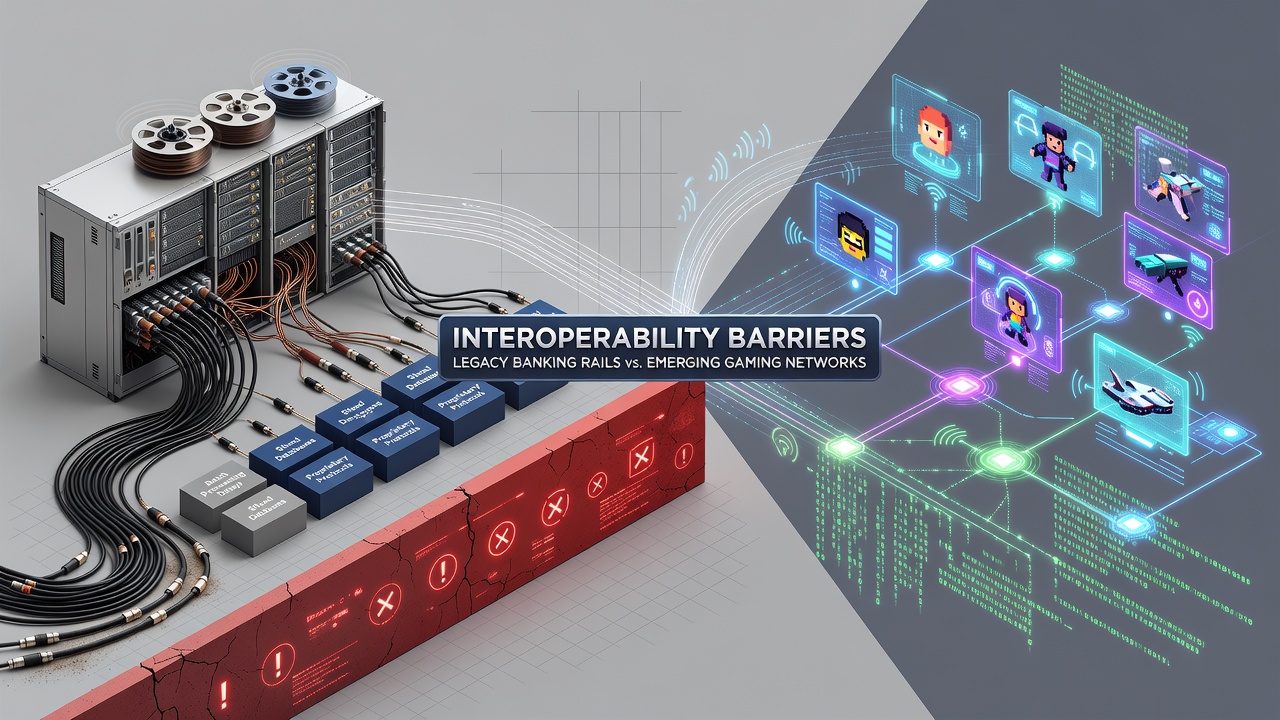
Charting Interoperability Barriers Between Legacy Banking Rails and Emerging Gaming Networks
Financial institutions continue to rely on decades-old transaction processing systems that were designed long before digital gaming platforms emerged, and these legacy rails create friction when operators attempt to integrate real-time settlement mechanisms used across virtual gaming environments. Data from mid-2026 shows that many traditional banking networks still process international transfers through batch systems that require multiple hours or even full business days to finalize, whereas gaming networks often demand instant confirmation to support in-game purchases and prize distributions.
Legacy Systems and Their Core Characteristics
Banking rails built in the 1970s and 1980s continue to handle the majority of global payment volume because they offer proven security protocols and established regulatory oversight, yet these same systems operate on fixed settlement windows that clash with the continuous activity cycles found in gaming platforms. Researchers at institutions tracking payment infrastructure note that batch processing remains standard across many regions, including systems maintained by central banks in Europe and North America, where daily cut-off times dictate when funds actually move between accounts.
Those who examine transaction logs from gaming operators report frequent mismatches in data formats, since legacy rails expect structured fields that gaming networks rarely supply in identical sequences. Currency conversion modules within older banking cores add further layers of delay because they recalculate rates only at predetermined intervals rather than on demand.
Technical Friction Points in Gaming Network Integration
Emerging gaming networks depend on API-driven architectures that push and pull data in milliseconds, and this speed requirement exposes gaps when connecting to banking rails that authenticate through older messaging standards such as ISO 8583 variants still dominant in several markets. Observers tracking integration projects in June 2026 documented cases where gaming platforms had to maintain parallel ledgers simply to reconcile timing differences between their instant ledgers and the slower confirmation cycles of connected banks.
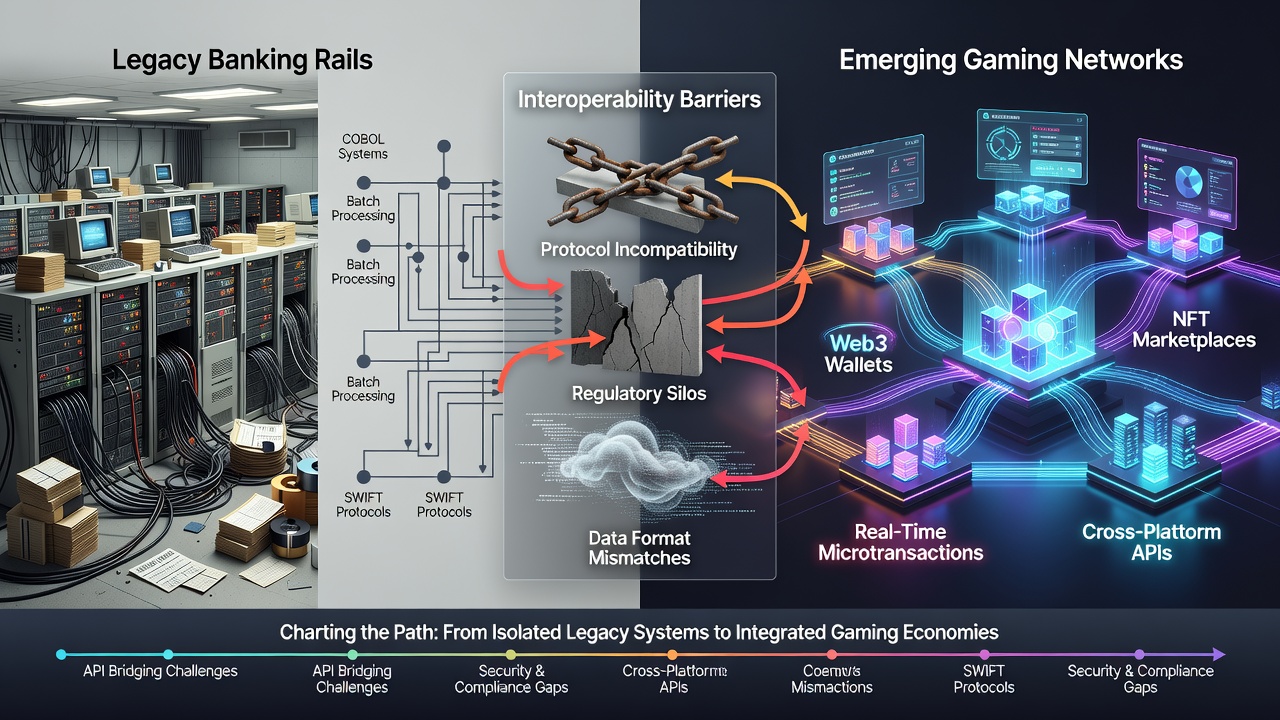
Security certificate management creates another barrier because legacy systems often enforce longer key rotation schedules than the rapid update cycles preferred by gaming operators who must respond quickly to emerging threats. Data shows that synchronization failures spike during peak gaming hours when transaction volumes surge and legacy authentication queues become backlogged.
Regulatory and Compliance Overlaps
Regulatory bodies across different jurisdictions impose distinct reporting timelines that further complicate data flows between the two environments, and analysts following the sector point to frameworks maintained by the European Central Bank alongside oversight from the Monetary Authority of Singapore as examples where timing requirements diverge sharply. Gaming networks must often pause withdrawals until legacy compliance checks complete, even when internal ledgers already confirm sufficient balances.
Those studying cross-border flows note that anti-money laundering protocols embedded in banking rails require manual review triggers at thresholds that gaming platforms exceed thousands of times per hour, forcing operators to build custom middleware that translates and buffers transactions before they reach traditional processors.
Regional Variations and Recent Developments
In Australia, the Reserve Bank of Australia has published guidance on modernizing payment messaging that gaming operators reference when planning connections, while Canadian provincial regulators have issued separate directives that emphasize real-time reporting for digital entertainment platforms. These differing approaches mean a single gaming network may need multiple integration paths depending on the banking rails it touches in each market.
June 2026 figures from industry monitoring groups indicate that roughly 40 percent of gaming operators still route a significant share of player funds through at least one legacy channel despite availability of newer alternatives, largely because established banking relationships reduce counterparty risk for larger prize pools.
Pathways Under Exploration
Industry consortia have begun testing standardized message translators that map gaming-specific fields into formats acceptable to legacy processors, and pilot programs coordinated with academic research centers have demonstrated reduced reconciliation times when such translators operate continuously rather than on scheduled batches. Yet full adoption remains limited because many banking institutions continue to prioritize stability over rapid interface changes.
Those tracking these developments observe that hybrid models combining tokenized references with traditional account details allow gaming networks to initiate transfers while legacy rails retain final settlement authority, creating an interim bridge that satisfies both security expectations and speed demands.
Conclusion
Interoperability between legacy banking rails and emerging gaming networks hinges on resolving differences in processing speed, data structure, and compliance timing that have accumulated across separate technological eras. Current efforts focus on middleware solutions and standardized translators that let both systems exchange information without forcing wholesale replacement of either infrastructure. Data collected through June 2026 shows gradual progress in select markets, yet widespread seamless connectivity still depends on coordinated updates across regulatory frameworks and banking institutions that operate on longer implementation cycles than gaming platforms.